
Any business owner who is serious about growing their business needs to understand equity. If you understand equity, you’ll feel confident bringing in outside investors, working with business partners, and understanding how much your “share” of the business is actually worth. Learn how to build, read, and use financial statements for your business so you can make more informed decisions. The simplest and quickest method of calculating stockholders’ equity is by using the basic accounting equation. Yes, this happens when a company finances more through debt than equity. While common in capital-intensive industries, excessive liabilities can signal financial risk.
Does total liabilities and equity include cash?
- Also referred to as shareholders’ equity, it is used in fundamental analysis to determine the company’s value.
- The asset to equity ratio interpretation parallels the debt to equity ratio (D/E) and equity ratio.
- Any loss encountered by the firm is directly reflected in the shareholders’ earnings.
- However, you can use both formulas to calculate equity for shareholders equally well.
- This is the percentage of net earnings that is not paid to shareholders as dividends.
By grasping this concept, you’ll be able to assess investments and make informed decisions that align with your financial goals. Take the time to understand Total Equity and its significance in evaluating a company’s financial stability. Too much debt can strain the cash flow; too little debt can slow growth. Equity gives insight into this balance since it’s shareholders’ investments minus any payments due to outsiders. To compute total liabilities for this equity formula, add the current liabilities such as accounts payable and short-term debts and long-term liabilities such as bonds payable and notes.
How do investors use total capital?
Negative equity occurs when a company’s liabilities exceed its assets, resulting in a negative net worth. This means that the company owes more than it owns and can be a cause for concern. Negative equity is often a sign of financial distress and can indicate the company’s inability to meet its financial obligations. Total Equity increases when a company retains more earnings, issues new shares, or experiences a rise in asset values. Positive net income added to retained earnings is the most common reason for an increase in equity. This knowledge empowers you to assess a company’s financial health and potential for future growth.
Established Business Equity
Identifiable intangible assets include patents, licenses, and secret formulas. If a company relies too heavily on debt as part of its total capital, it could face debt overhang risk, where the total equity formula debt becomes unsustainable, leading to financial distress. A high level of total capital indicates a robust financial foundation, which can enhance the company’s ability to withstand economic downturns or invest in growth opportunities. This formula can give a slightly more accurate picture of what shareholders may expect if forced/decided to liquidate a company or exit.
This guide offers a comprehensive overview of equity accounting, from basic principles to advanced applications, catering to beginners and experienced financial professionals. A company’s equity position can be found on its balance sheet, where there is an entry line for total equity on the right side of the table. This represents the net value of the company if its assets are liquidated.
- Fortunately, calculating equity for shareholders is relatively straightforward.
- Current liabilities can include accounts payable, short-term debt, and accrued expenses, while non-current liabilities can include long-term loans, bonds, and deferred taxes.
- The balance sheet equation is the foundation of the dual entry system of accounting.
- Calculating total equity allows you to determine how much of a company’s assets are financed by shareholders rather than creditors.
- A company with consistently rising equity may be better positioned to offer returns to investors through dividends or share price appreciation.
- It may make it difficult for the company to secure financing, attract investors, or develop new business opportunities.
It is calculated as the difference between assets and liabilities featured on the balance sheet of a company. It represents a company’s net asset value in front of investors, financiers, and the public. An organization with sound financial health always has positive equity, which means it owns more than it owes. Unlike preferred stock, common stock doesn’t guarantee dividends or retained earnings asset distributions. Compare total liabilities and equity with total assets and other financial ratios (like debt-to-equity) to assess financial health and risk levels. The above formula is known as the basic accounting equation, and it is relatively easy to use.
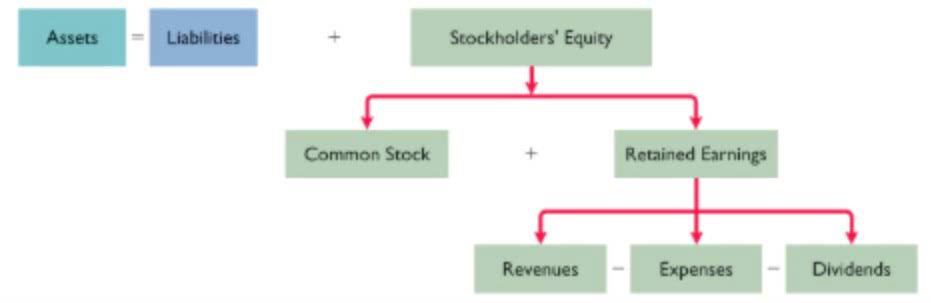
What Is the Stockholders’ Equity Equation?
Let’s say your friend owns a successful robot lawn mowing business (“think of it as a Roomba for grass,” he tells you) that you want in on. You were broke when the company first incorporated last year, but you have some extra cash now that you’d love to invest in the company. In addition to choosing a name, appointing directors, and filing certain documents, incorporation also involves issuing shares. Our intuitive software automates Record Keeping for Small Business the busywork with powerful tools and features designed to help you simplify your financial management and make informed business decisions. Not sure where to start or which accounting service fits your needs? Our team is ready to learn about your business and guide you to the right solution.

Current liabilities are debts typically due for repayment within one year. Current assets include cash and anything that can be converted to cash within a year, such as accounts receivable and inventory. The stockholders’ equity is only applicable to corporations who sell shares on the stock market.
Since repurchased shares can no longer trade in the markets, treasury stock must be deducted from shareholders’ equity. For mature companies consistently profitable, the retained earnings line item can contribute the highest percentage of shareholders’ equity. In these types of scenarios, the management team’s decision to add more to its cash reserves causes its cash balance to accumulate. If we rearrange the balance sheet equation, we’re left with the shareholders’ equity formula. So, while equity reflects ownership, ROE focuses on how well a company is utilizing that ownership (shareholder investment) to create profits.